When someone picks up our cup, they see finished beauty. And they almost never guess how much happened before that moment. The path is long - ten steps, and each involves handwork.
It all begins with selecting the ware. Not every piece is fit for painting: we test the shape, glaze and whiteness. Then the idea is born. The artist devises the subject, works out the composition and makes a sketch - sometimes in watercolour, sometimes straight on a tablet.
The finished drawing is scanned and printed on special decal paper, then lacquered and dried. Only after that can the image be carefully transferred to porcelain, forcing out air and excess moisture for a perfect fit.
Then the first firing, around 800 degrees. Here the drawing literally becomes part of the piece. But the work isn't done: on top, with the finest pen, real carat gold is applied by hand. This is the most painstaking part - it takes experience and patience. And back to the kiln for a second firing to fix the gold.
The last part is no longer about the porcelain itself. We design a box or chest for the specific set, add a certificate, a card, sometimes sweets. And now the piece is ready to travel to the person it was made for.
That's why an author's cup costs more than a factory one. You pay not for the porcelain, but for ten steps of attention to detail.
Other articles
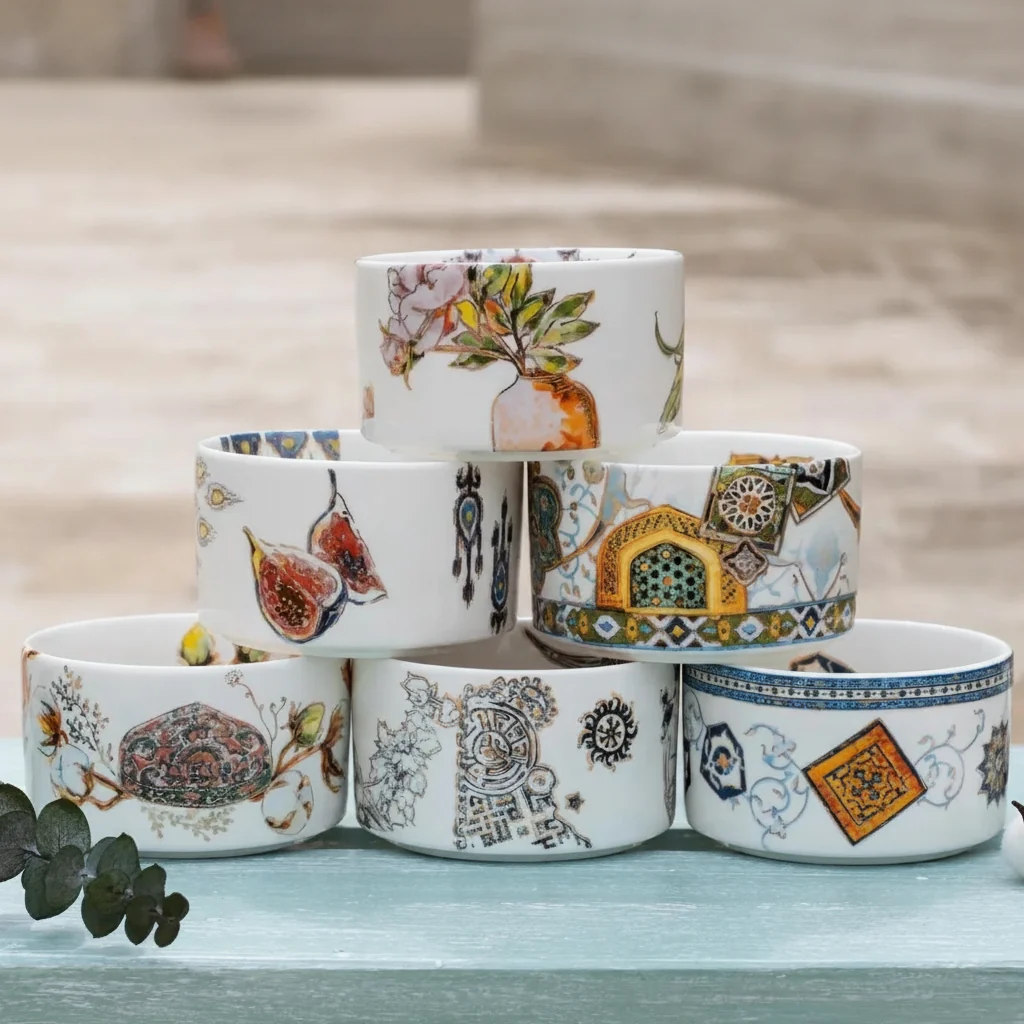
A crest on porcelain: an order that starts with a sketch
A family crest, a monogram, initials. How a family symbol becomes a set that's passed down.
Read →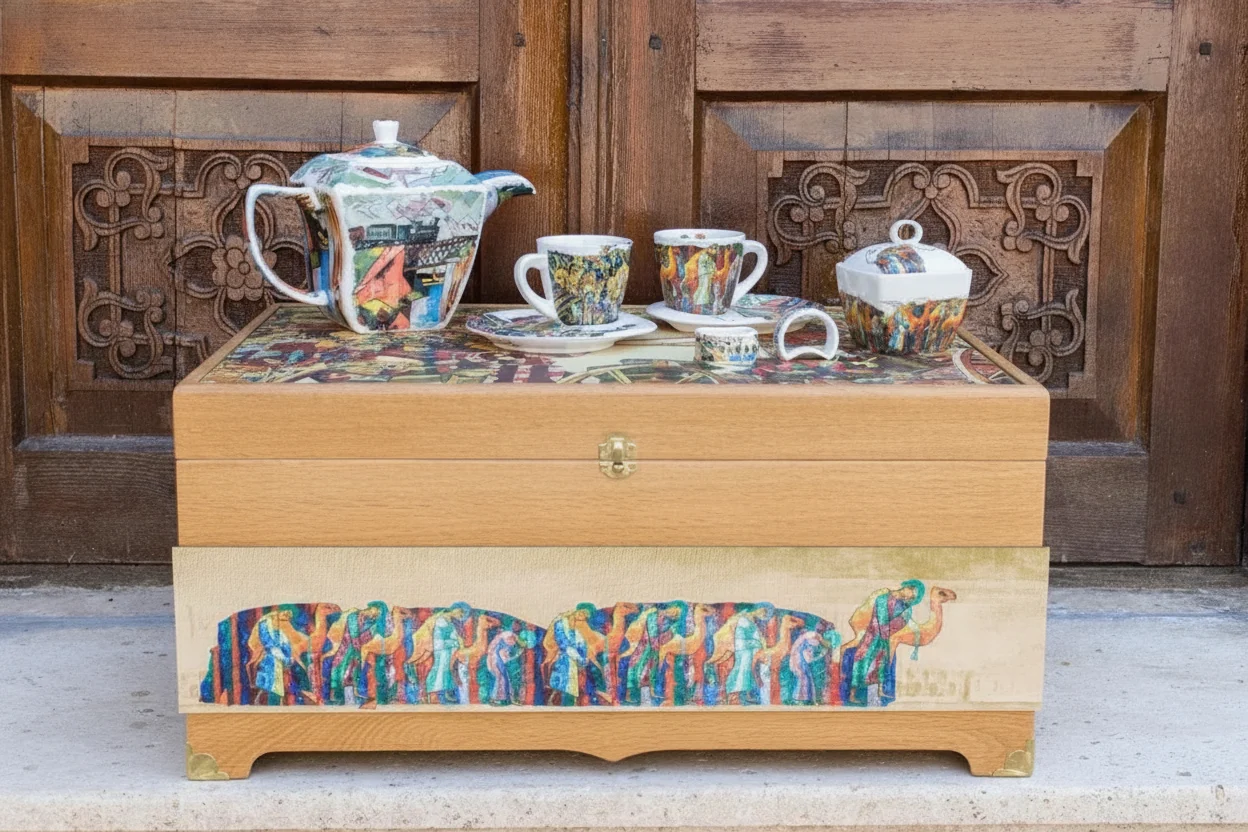
Wedding sarpa: the tableware a home begins with
Sarpa isn't just a dowry set. It's a young family's first heirloom, presented as a true gift.
Read →